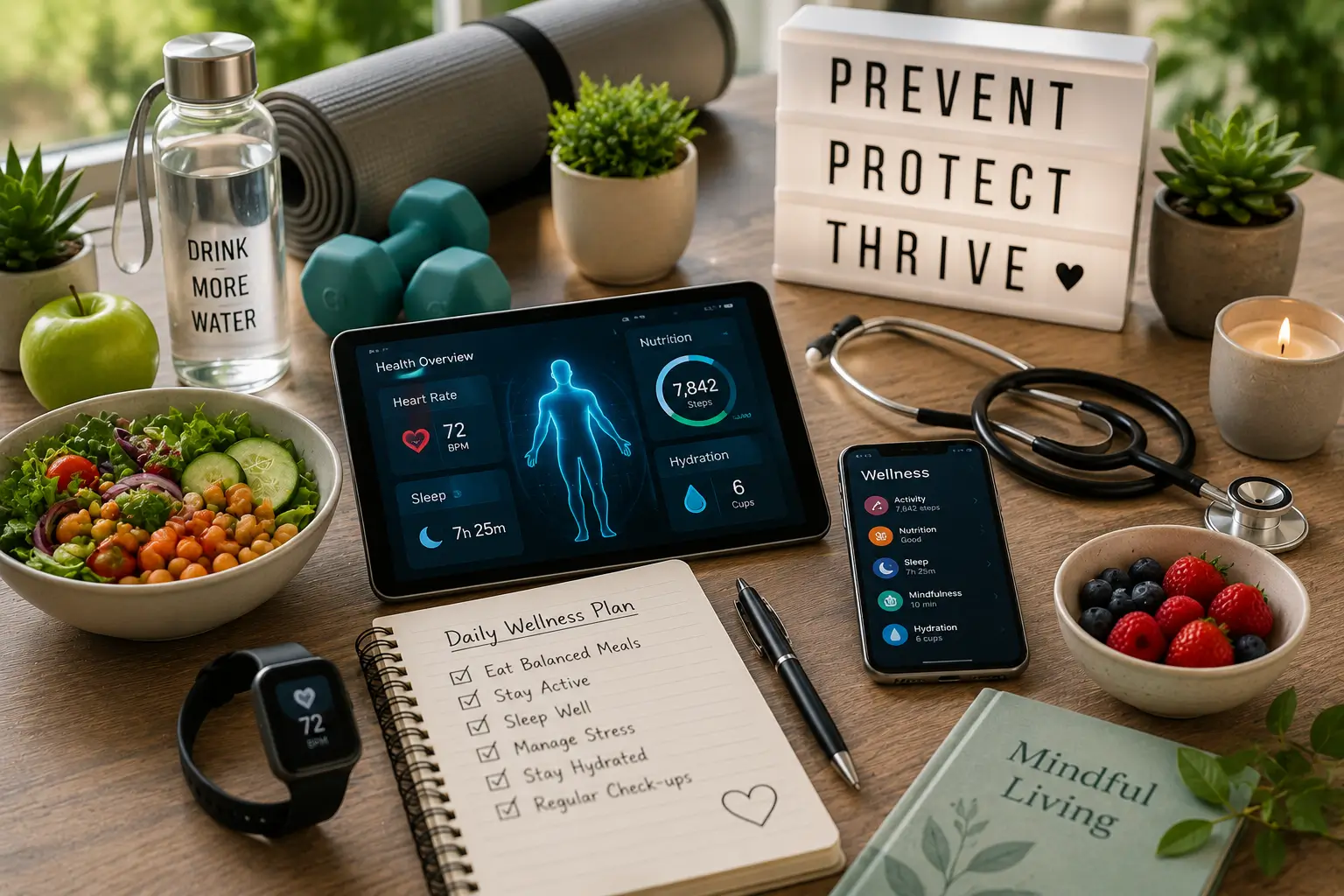

Health advice has never been in shorter supply. Scroll through any social feed and you’ll find a new diet, workout routine, or wellness hack promising rapid transformation. Yet for all this noise, rates of chronic stress, poor sleep, and lifestyle-related illness continue to climb. The gap between the amount of health information available and the amount of genuine, lasting behaviour change happening suggests the problem isn’t a lack of knowledge — it’s that most advice is built for short-term intensity rather than long-term sustainability.
Genuine wellbeing rarely comes from a single dramatic overhaul. It comes from a handful of manageable habits, practised consistently, that compound over months and years. This article looks at four areas where small, sustainable choices tend to matter more than any quick fix: movement, nutrition, mental health, and sleep — the quiet foundations beneath almost every other measure of wellbeing.
Movement That Fits Real Life
The fitness industry has long sold intensity as the measure of a good workout, but a growing body of evidence points to a simpler truth: consistency beats intensity almost every time. A daily walk, sustained over years, tends to deliver more meaningful long-term health benefit than an ambitious training programme abandoned after six weeks of burnout.
This has led to a welcome shift in how movement is talked about. Rather than framing exercise purely around aesthetics or performance, more people are focusing on movement as something woven into daily life — cycling to work, taking the stairs, gardening, playing with children or pets. These forms of “incidental” activity, once dismissed as insufficient compared to structured workouts, are now recognised as genuinely valuable contributors to overall activity levels, particularly for people who find traditional gym environments uninspiring or inaccessible.
Strength training deserves particular mention, having moved from a niche pursuit among bodybuilders to a mainstream recommendation for people of all ages. Beyond aesthetics, maintaining muscle mass and bone density plays a significant role in long-term mobility and independence, particularly later in life. The most sustainable approach tends to involve finding a form of movement that’s genuinely enjoyable, rather than one that’s simply effective on paper — enjoyment is what keeps a habit alive long after motivation fades.
Nutrition Without the Noise
Few areas of health advice are as contradictory and overwhelming as nutrition. Contradictory headlines, restrictive diet trends, and conflicting expert opinions have left many people genuinely unsure what a healthy way of eating actually looks like. Amid this noise, a simpler set of principles has consistently held up: eating a varied diet rich in whole foods, minimising heavily processed options, and paying attention to genuine hunger and fullness cues rather than rigid rules.
Mindful eating has gained particular traction as an antidote to diet culture’s obsession with restriction. Rather than categorising foods as strictly “good” or “bad,” this approach encourages a more balanced relationship with food — one that allows for genuine enjoyment without guilt, while still supporting long-term health goals. This shift matters partly because restrictive approaches tend to be genuinely difficult to sustain, often leading to cycles of restriction and overconsumption that do more harm than a more moderate, consistent approach ever would.
It’s also worth acknowledging that eating well carries a genuine cost, and access to fresh, whole foods isn’t equally available to everyone. Beyond the personal choices involved, there’s a real financial dimension to eating and living well that’s worth factoring into any honest conversation about nutrition and long-term health planning.
Mental Health as a Daily Practice
Perhaps the most significant shift in health conversations over the past decade has been the growing recognition that mental health deserves the same ongoing attention as physical health, rather than being addressed only once a crisis emerges. This has moved mental wellbeing from a taboo, rarely-discussed topic to a genuine, everyday priority for a growing number of people.
Stress management has become a focus for many, driven by rising awareness of how chronic stress affects nearly every system in the body — from cardiovascular health to immune function to sleep quality. Practices like mindfulness and meditation, once viewed as niche or even slightly esoteric, have become widely accepted tools, with a substantial and growing body of research supporting their genuine benefit for reducing stress and improving emotional regulation over time.
Equally important, though less discussed, is the role of genuine social connection in supporting mental health. Isolation has been increasingly linked to poorer health outcomes across nearly every measure, prompting renewed emphasis on maintaining real relationships and community ties — something that can be surprisingly easy to neglect amid busy schedules and increasingly digital forms of communication. Taking time to genuinely connect with others, not just message them, remains one of the most underrated tools for long-term mental wellbeing.
Sleep: The Overlooked Foundation
Of all the pillars of health, sleep may be the most consistently undervalued. It’s often the first thing sacrificed when life gets busy, treated as a flexible variable rather than a genuine biological necessity. Yet the evidence connecting sleep quality to nearly every other measure of health — cognitive function, emotional regulation, immune resilience, even long-term disease risk — continues to grow, making it increasingly hard to treat as optional.
Sleep hygiene has become a more mainstream concept as a result, encompassing practical habits like maintaining a consistent sleep schedule, limiting screen exposure before bed, and creating a genuinely restful sleep environment. These changes sound simple, and they are — but simplicity doesn’t mean they’re easy to implement consistently, particularly in a culture that often glorifies busyness and treats a full night’s sleep as a luxury rather than a baseline requirement.
Wearable technology has also played an interesting role in this shift, giving people unprecedented insight into their own sleep patterns and, in many cases, prompting genuine behaviour change as a result of seeing the data laid out plainly. Whether or not someone chooses to track their sleep formally, the underlying message remains consistent: sleep isn’t a passive backdrop to a healthy life, it’s an active, essential component of it — every bit as important as diet or exercise, and arguably harder to compensate for once it’s consistently neglected.
Ultimately, sustainable health isn’t built on dramatic transformation. It’s built on the accumulation of small, consistent choices around how we move, eat, think, and rest — choices that, individually, might seem modest, but collectively shape how well we live for decades to come. And increasingly, how we express and present that sense of wellbeing has become part of a much broader conversation about personal identity and style, extending well beyond the gym or the kitchen.